
Toward a Postmodern Astrology
By Glenn Perry
“Be the change that you want to see in the world.”~Mohandas Gandhi

My purpose in this article is to draw some distinctions between traditional, modern, and postmodern astrology, and show how these different types and levels of astrology can be reconciled within an evolutionary framework.
Just as human consciousness evolves through stages and levels, so too does astrology. Each major stratum in the history of the divine science—traditional, modern, and postmodern—is inclusive of the previous level, but in a way that changes the perspective of that level by adding something new.
Over the past two millennia, astrology has undergone a gradual evolution that can roughly be divided into three stages: 1) a traditional focus on fate that downplayed free will; 2) a modern emphasis on free will that downplayed fate; and 3) a postmodern view that integrates fate and free will as equal parts of an open system, each shaping and reshaping the other in a co‑evolutionary feedback loop.
Before proceeding further, it will be useful to define these different strata more fully. By traditional astrology, I mean any astrology that relies predominantly upon techniques and perspectives that predate the 20th century. This includes Hellenistic, medieval, and Vedic astrology, all of which emphasize prediction of mundane events while offering limited descriptions of behavioral traits. Most importantly, traditional astrology marginalizes the significance of free will.
Twentieth-century modern astrology can be defined as a pared down extension of traditional astrology—it still used signs, houses, planets, and aspects—but eliminated much of the evaluative jargon that typified traditional approaches. Also eliminated were certain techniques such as sect, terms, parts, triplicity rulers, and time lords, either because they were lost or questionable as to their validity. As Robert Hand points out, such techniques had been designed precisely for the sake of arriving at greater specificity and certainty of outcome, so their elimination warrants a defense.1
Toward the end of the traditional period, 16th century astronomer-astrologer Johannes Kepler famously asserted that astrology had become such a mishmash of half-baked doctrine that it was almost impossible to “separate the gems from the slag.”2 Likewise, the venerated 17th century French astrologer, Jean-Baptiste Morin, argued that “terms, decans, faces, parts and…other worthless items introduced by the Chaldeans, Arabs, and Egyptians…were invented and therefore unfounded in nature.”3
Morin’s reference to “nature” is presumably in relation to empirically observable core variables—signs, planets, houses, and aspects—that comprised the foundation of astrology since its inception. Signs are measurable phases of the earth’s orbit about the Sun; planets are empirically observable celestial objects; houses are measurable phases of earth’s 24-hour diurnal rotation; and aspects are measurable angles between planets during their synodic cycles. While early astrologers did not yet fully understand the astronomy involved, there was no question that these core variables of astrology were part of nature, which is to say their meanings were not invented; rather, they were observed.
In research, a critical feature of any knowledge-claim is the criterion of falsifiability.4 To be credible, a statement must be made in such a way that it can conceivably be disproved. That is, it must be testable. If there is no way to disprove a claim, there is no way to prove it either. For a variety of reasons, the claims of traditional astrology that pertain to the alleged meanings of sect, terms, parts, triplicity rulers, and time lords tend to be unfalsifiable and thus fall into the category of mere speculation. As this has been discussed elsewhere, I will not detail the arguments here.5 Suffice to say such techniques were largely eliminated by the beginning of the modern period.
Meanwhile, the most significant contribution of 20th century modern astrology was the introduction of a psychological orientation that focused on personality descriptions and the human capacity for growth and development. It should be noted that emergence of the modern attitude was in part a reaction against the fatalistic, event-oriented approach of traditional astrology. In the modern era, prediction was radically deemphasized in favor of a greater focus on free will, the interior world of the psyche, and the actualization of personality potentials.
Over the past three decades, however, there has been a resurgence of interest in lost or eliminated techniques, largely due to the discovery and translation of Hellenistic and Medieval texts by various scholars within the astrological community.6 This movement is known as the “traditional revival” and is ongoing.
The question thus arises, what is or will be postmodern astrology? This must remain to some degree an open question as there is no consensus at the current time as to what astrology will look like in coming years. Presently the field is embroiled in a chaotic and creative ferment out of which will presumably emerge a relatively coherent system that incorporates ideas from competing perspectives.
It is a general feature of evolution that later, more complex systems transcend but include earlier levels as component parts in a new structure, retaining what is useful and eliminating what is not. It follows that less credible techniques from both traditional and modern approaches will be jettisoned along the way, for that is the nature of any evolving system.
Uniting Inner and Outer
I propose that a major theme of postmodern astrology is likely to be restoration of the traditional emphasis on event outcomes but within an overarching, psychological perspective. In other words, outer events should be given weight and importance as topics of significance in themselves; yet their meaning can be interpreted in the context of how they reflect the psychodynamics of the birthchart.
Outer events are significant not merely because they happen and to varying degrees can be predicted, but because of their purpose as vehicles and catalysts for an ongoing evolutionary process—that is, an evolution of psyche. It follows that a defining feature of postmodern astrology will be emphasis upon the dynamic feedback relations between psyche and environment.
Modern astrology in the 20th century was psychological only in the sense that its focus was on the personality, albeit in a somewhat superficial way. While various authors loosely incorporated humanistic and Jungian ideas into their formulations, the vast majority of these writings, with rare exception, were philosophical or focused predominantly on descriptions of behavioral traits. There was little that could be considered psychological in the sense of an in depth, full blown personality theory on a par with the complex models of modern psychology.
According to Hall & Lindzey’s authoritative Theories of Personality (1978), any adequate theory of personality must be comprehensive in that it deals with the total, functioning person; it must account for what motivates behavior; it must contain a set of empirical definitions concerning parts of personality; and it must consist of a network of assumptions as to how the parts are systematically related.7 The very nature of the term psyche, which is Latin for ‘soul’, refers to the personality as a whole and embraces all psychological processes, both conscious and unconscious.
As a self-regulating system, the psyche is thought to be dynamic, meaning characterized by continuous change, activity, or progress. Psychodynamics explains how the psyche is comprised of self-activating, goal-directed, and interacting forces that underlay all thoughts, feelings, and behavior. The relation between motivation, emotion, cognition, and behavior is the prime topic of psychodynamics.
Although astrology is implicitly a personality theory of enormous scope and power, it must be admitted that modern, 20th century psychological astrology never offered a cogent, comprehensive theory of the person along the lines described above. In that regard, it was only barely psychological. And while it continued to use predictive methods for purposes of prognostication (though prediction was demoted in value), there was no clearly formulated theory of development that encompassed the human life span, no maturational stages, and thus no actual developmental astrology on a par with the models of Freud, Erikson, Piaget, Kohlberg, and others.
Likewise, there was no lucid theory of how psychopathology could be discerned in horoscopes, or how psychotherapeutic techniques could be systematically integrated with astrology to resolve problems, facilitate growth, or relieve suffering. Most importantly, there was no precise, systematic formulation of how astrological variables manifest simultaneously as intrapsychic processes and external events connected by co-evolutionary feedback loops. It is left to a postmodern astrology to remedy these deficiencies. As this has been the thrust of my own work, I am confident it can be done.8
The history of astrology reveals that its various forms and permutations invariably reflect the dominant paradigm of the era. The discipline of depth psychology, courtesy of Freud and Jung, was born in the early 20th century and largely defined the age. The astrology of the time necessarily began to incorporate and reflect this new sensibility.
While proponents of the traditional revival in astrology are inclined to ignore its psychological dimension—or, more radically, wish it to be surgically excised like a cancerous growth―such antipathy is for the most part unwarranted. Psychology is now inextricably part of astrology. We cannot go backwards and remove it; we can only improve it. By the same token, the emphasis on prediction of outer events that is characteristic of traditional astrology must likewise be preserved and improved.
It would probably be fair to say that these two camps—psychological and traditional—have generally been regarded as antithetical to one another, like oil and water. One looks to the interior, subjective realm of psyche, the other to the exterior, objective world of events. As stated, the modern psychological attitude began during the early part of the 20th century when psychology itself was in its infancy and when the empirical method of modern science dominated the thinking of the day.
Because traditional astrology was not easily reconciled with the cause-effect, mechanistic thinking of science (despite its outward appearance as a predictive model that could be tested), the divine ‘science’ was held in wide contempt and astrologers were increasingly in jeopardy of legal prosecution.9 As a consequence, prediction was de-emphasized in favor of personality analysis, which was less likely to be attacked on grounds of being fraudulent.
Hostility toward event-oriented, predictive astrology peaked during the latter half of the 20th century with the popularity of such astrologers as Dane Rudhyar, Richard Idemon, Liz Greene, and Stephen Arroyo. Rudhyar in particular criticized traditional astrology as fatalistic, dualistic, and judgmental in its emphasis on good and bad points in charts. He also chided the field for irresponsible predictions that were overly negative and alarming to clients.10 Most importantly, traditional astrology was charged with being unawares of the human capacity for growth and change.
Toward the end of the 20th century, however, the pendulum swung back again with traditional astrology regaining popularity at least partly in reaction to the mushy vagueness of the new, psychological approach. Leading lights such as Robert Hand, Robert Zoller, Demetra George, Ben Dykes, Robert Schmidt and Chris Brennan criticized modern astrology not only for its relative lack of precision, system, and rigor, but also for its de-emphasis on prediction and the veracity of fate.
If there is to be an enduring reconciliation between these two branches of our discipline, it will require a cogent explanation as to how inner and outer worlds are related. At first glance, their connection may seem self-evident. For every astrological variable there is a subjective, psychological meaning as well as an objective, environmental one. Venus, for example, not only signifies our capacity for beauty and love, but also that which is beautiful and beloved. Since any astrological configuration has both an inner and outer meaning, the implication is inescapable: the outer reflects the inner and vice versa.
The fact that astrological variables have dual significations does not necessarily clarify if or how they are causally connected. Do outer Venusian experiences condition us psychologically so that if we are well loved we develop a corresponding inner attitude? Or is the reverse true: we have an inborn Venusian capacity that manifests in how we love as well as in our experiences of being loved?
Either conception seems to imply astral determinism. In the first, the stars determine outer experience, which then conditions the inner attitude. In the second, the stars determine the innate capacity, which is then mirrored by external circumstance. Both conceptions are linear in that the relationship between above and below is described as a straight line: upper cause leads to downward effect.
The formulation is also static in that there is no recognition of a circular, ongoing developmental process that unites inner and outer, or above and below. Instead, upper is the cause of lower and once the lower condition is established, it remains the same indefinitely. Likewise, outer events may reflect inner predispositions without revealing any meaning other than both are equally symbolized by the astrological chart. It is precisely this sort of linear, static, and deterministic conception that is being challenged by new formulations of astrology.
The Significance of Time and Evolution
An alternative to the linear and static conceptions of earlier models is to postulate that psyche and environment are in a process of constant, reciprocal influence by virtue of feedback mechanisms. One is not the cause of the other; rather, they are dynamically and circularly related in a manner that facilitates their co-evolution.
The hallmark of late 20th century systems science was the recognition that we live in an organic universe in which matter is conscious and alive, purposively organizing itself into more complex states—living systems—that allow for higher degrees of freedom and awareness over time.
Significantly, this view is in keeping with the ancient doctrine of the macrocosm and the microcosm in which cosmos was thought to be conscious and alive throughout the stratified hierarchies of existence, from planets to particles. The key difference between ancient and modern conceptions has to do with the element of time.
Up until the 19th century, western metaphysical and spiritual traditions presupposed that the Universe was birthed in a single instance of time, much like a human birth. In the Old Testament, God made the world in six days. Similar origin myths prevailed in other cultures. Aristotle’s cosmology asserted that the cosmos existed, unchanged, for all eternity. Within this perfect order, the regular movements of the celestial spheres could be measured and predicted.
Time was conceived as cyclic—that is, reoccurring just as seasonal phenomena repeat themselves each year in a preordained sequence. But if time was merely cyclic, then it could not also be progressive in the sense of leading gradually to improvement and reform. The Universe existed in a steady state and was not perceived as evolving continuously toward higher, more complex systems of matter and awareness. Not until Hegel’s The Phenomenology of Spirit was published in 1807 did a fully articulated vision of history as progress first appear.
Hegel asserted that human consciousness develops through a historical progression leading to increasingly higher forms of expression. Every individual contains the spirit of the Absolute as an indwelling consciousness that comes to know itself as infinite only by evolving through the various entrapments and limitations of matter and up the great chain of being—atom, molecule, cell, multicellular organism, plant, animal, human.
Like every living system that preceded it, the human being is a vehicle through which God comes to be gradually, consciously realized. What is most significant about the human level is that the part—the human being—is now able to recognize itself as an embodiment of the whole; microcosm not only reflects macrocosm but is progressively awakening to conscious awareness of this fact.
Subsequently, the idea was taken up by the French philosopher, Henri Bergson, whose writings gained widespread support in the early 20th century and were further elaborated by the Jesuit priest and anthropologist, Teilhard de Chardin, in his monumental The Phenomenon of Man (1955). Charles Darwin, of course, had formulated a theory of biological evolution in 1860, but this was a limited treatment of a much broader, deeper topic—evolution itself. Today the topic of evolution is understood as encompassing virtually every dimension of existence, from the evolution of the Universe to the evolution of human consciousness.
Countering Darwin, these later theorists argued that chance alone was insufficient to account for the progressive organization of matter into self-aware, conscious beings. Over the last century, an increasing number of biologists have come to believe there is some kind of inner guiding principle—Intelligent Design—that exercises a purposive and formative influence upon life, drawing it inexorably forward toward a diversity of higher and more complex forms.11
In this view, the basic and ultimate stuff of the Universe is Consciousness; thus, consciousness is not the end product of material evolution, but that which directs and is realized through evolution. As the primary and irreducible essence of the Universe, consciousness is both Being and Becoming. As Being, Consciousness organizes matter-energy into its various states; as Becoming, consciousness is that which is organized and that which evolves.
It is important to recognize that horoscopic astrology emerged during a period of human history―1st century CE―in which there was no concept of evolution or human growth and development. This was reflected in its relatively static descriptions of temperament and fixed depictions of fate. The Aristotelian cosmos eternally revolved but never evolved. Hence, the holy grail of traditional astrology was accuracy and certainty: accuracy in its descriptions of behavior, and certainty in its prediction of fate. Yet, if both character and fate are malleable and can evolve over time, then the goal of accuracy/certainty is only relatively attainable.
It could be argued that the ever-increasing array of astrological techniques, rules, and formulae that mushroomed over the centuries (sect, terms, parts, triplicity rulers, time lords…) did so in pursuit of an illusion that time was merely cyclic and thus its productions—natural phenomena—should be entirely predictable. However, if time is not merely cyclic but also progressive, then so are the beings that evolve within it. Despite the fixed outline of astrological symbols in natal charts, the character and fate they depict are evolving processes. This makes prediction of future states and events exceedingly difficult.
One of the great achievements of 20th century science was recognition that living systems, including human beings, evolve by processing the effects of their own behavior. General systems theory encapsulated this idea in the concept of feedback, which can be defined as that effect of a system’s output that is reintroduced to the system as information about the output. As the system assimilates this information, it learns and evolves, adapting its behavior to circumstances that reflect its current level of organization. Outer events serve as a vehicle and catalyst for change. It follows that the relationship between inner and outer is circular, not linear.
In psychology, the systems concept of feedback was reflected in Swiss psychoanalyst C.G. Jung’s notion of synchronicity. Jung pointed out that inner states (attitudes, thoughts, beliefs) are often coincidentally paralleled by outer events (people, places, and things) that have the same or similar meaning. External events not only reflect the internal realm, said Jung, they often trigger breakthroughs and realizations that are transformative.
Because circular relations are ubiquitous in open systems throughout Nature, there is reason to believe feedback is orchestrated by an all-encompassing, transcendent intelligence immanent within synchronistic phenomena and thus operative in both inner and outer realms. There is a spark of divinity within every being that partakes of the creative powers of the Universe while also manifesting as a specific pattern of events that mirrors the structure of the soul.
In this light, postmodern astrology can be differentiated from both traditional and modern astrology by virtue of its heightened sensitivity to the psyche’s co-creative, participatory relationship with cosmos and, therefore, the radical uncertainty of astrological outcomes. In a purposive cosmos whose prime directive is transformation of parts into higher, more complex wholes, the notion of a fixed, predictable character and a static, unchanging fate is anachronistic.
Different Definitions of Helping
Experiences with clients have instilled in me a deep and abiding faith in the human capacity for change. That faith has been bolstered by recent developments in the new paradigm sciences that suggest we live in an organic Universe that appears intelligently designed to facilitate the evolution of consciousness back to source. An inevitable consequence of the new, evolutionary view is reappraisal of the purpose of astrology. How can our work with clients be aligned with an orderly, yet evolving cosmos that allows for increasing degrees of freedom, awareness, and choice?
Like any practitioner of the divine art, my ultimate objective is to be helpful. I know well the prime directive of the helping professions: do no harm. But what constitutes harm and what constitutes helping? At first glance, this might seem a pointless question. Surely one does not need special training merely to be helpful. In recent years, however, there has been an avalanche of studies demonstrating that much of what people think is helpful is actually harmful. Conventional notions of ‘helping’ can have unintended consequences both for the helper and the helped.
The proclivity to help too much goes by various names: enabling, codependency, rescuing, meddling, and helicopter parenting, all of which entail an excessive and unwarranted assumption of responsibility for the welfare of another person. Consequences of helping too much include undermining autonomy, subverting responsibility, encouraging an unhealthy dependency, and generally obstructing the development and maturation of the person being ‘helped’. For the helper, it also leads to burnout, compassion fatigue, irrational guilt when one can never help enough, and anger when one’s efforts ultimately prove, in the end, to be unhelpful.
We have our own version of this in astrology. Again, what constitutes helping? Traditional and psychological astrologers are likely to answer this question differently. From a traditional perspective, helping might be defined, in part, as accurate prediction of future events with guidance how to minimize difficulty and avert risk. The client may be advised how to avoid the painful consequences of aspirations that are alleged not to be supported by the natal chart. Rather than allow clients to pursue objectives that may result in disappointment or frustration, the astrologer guides them toward pursuits that presumably are supported by the chart.
Psychological astrologers are apt to regard this sort of help as unhelpful, arguing that the future is largely unknowable (at least in a concrete sense) and, more importantly, that struggle and adversity have benefits independent of whether people ultimately achieve their goal. Moreover, personality is malleable and capable of growth, the achievement of which empowers clients to conquer adversity and achieve fulfillment in precisely those areas of the chart that appear most challenging. From this perspective, astrologers should encourage clients to pursue objectives that are personally meaningful to them. The outcome of such pursuits is less important than the process itself. Ease and triumph is not the goal, but rather the psycho-spiritual development that occurs along the way. It is the journey that matters, not the destination.
When a traditional astrologer steers the client toward or away from certain goals, the implication is that she is an all-knowing seeress capable of foreseeing what the outcome will be and thus which actions of the client will lead to success/happiness and which to failure/suffering. This presumption is precisely what is challenged by the psychological camp. Not only is predictive astrology notoriously unreliable,12 but the idea that suffering and adversity have no value—that is, do not build character, nor, via lessons learned, contribute to future success—is appallingly shortsighted. The guiding principle, therefore, should be non-interference in the natural course of events.
Traditional astrologers might counter that use of astrology to facilitate growth and development is to mislead clients, for people cannot fundamentally alter their temperament or character, which is indicated a priori by the chart. To encourage clients that such efforts can alter future outcomes and lead to more fulfilling lives is Pollyanna at best, for the future is fixed, as indicated by the chart, and to assume otherwise merely gives clients false hope.
From the foregoing, we can see that each tradition’s view of helping/harming is the antithesis of the other. What traditional astrologers regard as helpful is seen as potentially harmful by psychological astrologers, and vice versa. Each perspective’s definition of helping/harming is underscored by an implicit worldview with derivative values and guiding principles.
Postmodernism
Since this article is principally about a newly emerging postmodern astrology, a further definition of postmodern is in order. As might be expected, the two camps differ in their usage of the word. Traditional astrologers simply mean a recovery of ancient techniques grafted onto modern astrology. Such an approach does not exclude modern innovations but integrates them with lost techniques and practices that have recently been recovered—hence, postmodern.13 But this is something of a misnomer in that such a synthesis is actually a Frankensteinish hybrid of modern and premodern. In this regard, it entails a backward movement more than a forward one.
Incorporating traditional techniques into modern practice is a bit like Jurassic Park―the Michael Crichton novel that depicts the reintroduction of extinct organisms (dinosaurs) into a 20th century ecosystem. The outcome: a gigantic culture clash that leads to mayhem and disaster. In a similar way, modern astrology is largely discontinuous with premodern values and objectives since the latter developed in the context of a worldview that (to varying degrees) regarded human fate as fixed, knowable and predictable right down to details.
Within that framework, the application of both natal and horary astrology was directed at providing precise answers to specific questions. Ever new techniques were developed in an attempt to achieve greater specificity and certainty of information about concrete outcomes—ergo, the fate of the native.
Conversely, a postmodern worldview holds that the future is to some degree open and that both character and fate are co-evolving via a process of mutual influence. In this view, character and destiny are at least partially indeterminate. Ancient techniques that presumed a fixed fate predetermined by planetary positions was based on a flawed premise.
Whereas neo-traditional astrology defines postmodern as a synthesis of ancient and modern techniques, what I mean by postmodern astrology is in keeping with postmodern approaches across scientific disciplines. Postmodernism is chiefly concerned with the replacement of modern dualism, reductionism, and mechanism with an ecological, organismic paradigm in which the entire Universe is perceived as a living, intelligent, purposive Being, a pervasive consciousness immanent in all things and processes.
In such a Being, internal relations have priority over external relations. Rather than depicting human beings as isolated and mechanically determined by outside forces, a postmodern view sees them as interconnected with the external world yet self-determining at an internal level. Just as in ancient times, the Universe is conceptualized as a living organism in which consciousness rather than matter is the ultimate reality. The difference, again, is that in the postmodern view, consciousness is not static but evolving through events toward higher states of integrity over time.
The postmodern perspective derives from recent advances in the physical sciences that show reality to be “chaotic,” meaning complex, unpredictable, purposive, and intrinsically creative. Properties of freedom, intelligence, and intentionality seem to be immanent in matter at all levels and are increasingly recognized in theories coming out of the fields of physics, biology, and psychology. In effect, postmodern science has thrown off the chains of mechanism and is revitalizing the organic paradigm it once replaced.
Emphasis has shifted from analyzing foundations (reducing wholes to their parts) to understanding relationships—how the parts constitute the whole. Deterministic thinking has been overturned by the discovery that living systems (think astrological charts) are non-linear, self-regulating wholes. The functioning of the whole cannot be reduced to the simple, cause-effect relations of its parts as if it were simply a machine. A small disturbance in one part of the system can spread and increase exponentially throughout the system due to the complex interdependencies that link all parts together. Again, this makes the overall system’s behavior creative, unpredictable, and indeterminate.
When these ideas are applied to astrology, the implications are far reaching. It is precisely because the whole predominates that it is impossible to select any one part of a birth chart and delimit its meaning. An astrological configuration, like Venus square Saturn, is not a thing; it is not a concrete, unchangeable entity that is the same for every person and can be reduced to a particular behavior, trait, attitude, or event. In every actual instance, the meaning of Venus square Saturn is going to be shaped by the whole of the chart of which it is a part. Meaning is a product of relationship, of context. Given that every astrological chart is unique, this underscores that there is an inherent and inescapable ambiguity to chart configurations that can never be eliminated.
Like postmodern science in general, postmodern astrology recognizes that pattern is more fundamental than substance. It is the overall pattern constructed out of planetary relations that symbolizes the nature of the person. In this type of astrology, it is axiomatic that the whole is greater than the sum of its parts. Postmodern astrology evidences a shift from structure to process thinking. Planets are more like processes than things. Just as planets move in their orbits, so a psychological process implies movement, a drive toward a state of satisfaction. To satisfy a given need, for instance, the individual is required to act, to pursue, to strive toward the goal. Planets are the strivers, while the signs they rule are the motive behind the striving.
Each planet is required to adapt and coordinate itself with other planetary functions. In so doing, beliefs evolve vis-a-vis the likelihood of satisfying the relevant needs that underlay and motivate planetary actions. Discordant, maladaptive beliefs reflect a lack of integration, manifesting in dysfunctional behavior and frustrating life experiences. Such experiences, in turn, constitute feedback that provides an opportunity to relearn, which leads to increasingly functional, adaptive beliefs that produce more fulfilling experiences over time. And so the process goes, round and round, an ever widening and deepening spiral of development.
Such an understanding of the chart is dynamic rather than static. The idea of process not only applies to relations between planetary functions, but also to the process of personal growth. From a postmodern perspective, the horoscope symbolizes a fluid, self-actualizing, self-determining individual growing progressively toward an ideal state.
Chart configurations should be interpreted on a continuum of integration. At lower levels of integration, they mean one thing, at higher levels, another. Yet, the varying outcomes along the continuum are equally consistent with the symbolism involved. Higher levels of integration lead to increasingly functional behavior, yielding outcomes that are more fulfilling because associated needs are mutually satisfied.
An Evolutionary Point of View
Implicit in the postmodern view is the idea that human consciousness evolves both individually and collectively. Changes in consciousness over the past 4000 years are reflected not only in the way we understand the Universe and our position in it, but also in the way astrology has evolved. It may be that older and newer approaches to astrology simply reflect different stages in the evolution of human consciousness. This is especially relevant to questions pertaining to fate, free will, and determinism.
The general trend in the evolution of consciousness is from less conscious, less differentiated states that project power outwards, to more conscious, increasingly differentiated states in which humans participate in a co-creative manner with heavenly powers. Greater self-differentiation implies a growth in self-agency—the subjective sense of initiating, controlling, and executing one’s freely chosen actions. Rather than seeing oneself as a mere effect of celestial causes, there is awareness that the gods also reside within and are, in part, subject to self-control. This makes us agents of our own behavior.
Paradoxically, self-agency also implies greater adaptation to the creative power of the cosmos that is continually orchestrating experiences designed to facilitate one’s learning and development. The higher the individual’s development, the more open, trusting, and well-adapted they become. In effect, the evolutionary movement of consciousness is from determinism to indeterminism, an arrow of time that points in the direction of increasing degrees of freedom, awareness, agency, complexity, resilience, and openness to change.
With regard to astrology, the history of the divine science can be roughly divided into four stages, or strata: archaic, traditional, modern, and postmodern.14 It should be noted that each stage is characterized by its own style of relatedness to cosmic powers. Earlier styles are partially retained by successive strata, yet each later level adds new, emergent capacities built upon the foundation of what has gone before. We will briefly examine each of these strata in turn.
Stage One: Archaic Astrology
The archaic stage (2500–500 BCE) correlates to Babylonian omen astrology in which heavenly powers were thought to more-or-less completely determine events on earth. In this regard, archaic astrology was both predictive and mundane. It concerned itself exclusively with collective events that impacted the entire community, such as threats of war, the health of the King, how weather conditions might affect crops, and so on.
While the gods could be entreated to change their minds through various forms of prayer, ritual and magic (fate was negotiable), human life was never-the-less at the mercy of external causative agents—the planetary gods. I call this the weak version of astral determinism. At best, ancient Babylonians strove to manipulate the gods and align with their powers through offerings and sacrifices; yet this only serves to underscore the external locus of control that characterized the age.
Omen formulations based on changing planetary appearances and movements were encapsulated in simplistic ‘if, then’ conditional statements: “If Mars approaches the Scorpion, then an enemy will breach the palace of the prince.” Since the entire cosmos was perceived as an interdependent, organic whole, the basis of omen divination was that an event in one part of space corresponded to an equivalent event somewhere else. “Although the gods caused both the omen and the succeeding event [an enemy breaches the palace],” says Campion, “there was no cause and effect relationship between the two….To the Babylonian mind, they could be connected because the world was a single, living whole.”15
Note how Campion’s description alludes to an implicit lack of differentiation between human and cosmos. Again, causal power was presumed to lie exclusively in the godly realm to which humans were utterly subservient. If Mars approaches the Scorpion, then an enemy must breach the palace.
Moreover, the fact that capricious gods could be flattered, cajoled, and persuaded to change their minds through ritual, prayer, and sacrifice gave them characteristics that were decidedly human. All of this was part and parcel of a worldview in which consciousness was still relatively embedded in Nature. Human attributes and motivations were projected onto the gods who, while all powerful, were imagined as having the same vices, whims, and passions as their human counterparts.
Stage Two: Traditional Astrology
The rise of Greek stoicism in the 3rd century BCE was a natural outgrowth of dramatic improvements in Babylonian mathematics and astronomy. These advancements enabled star gazers to measure planetary movements with unprecedented precision. The unvarying and thus predictable regularity of planetary movements gave rise to the idea that the gods may be less responsive to human wishes than previously assumed.
As Hellenistic astrologer Vettius Valens put it, “It is impossible to defeat by prayer or sacrifice that which has been established since the beginning of time.”16 Consequently, Hellenistic astrology was even more fatalistic than its Babylonian forbears.
Following Alexander the Great’s conquest of Mesopotamia in the 4th century BCE, stoicism and the new astronomy congealed in the form of Hellenistic astrology, which was fully formed by the 1st century CE. This inaugurated the second stage or what we might call the strong version of astral determinism. Hellenistic astrology prevailed in one form or another (Arabic, Medieval, Vedic) right up until the 17th century.
It is of no small significance that at the start of this period the first individual horoscopes were constructed.17 This is consistent with a general trend in the evolution of human consciousness toward greater differentiation; that is, a deepening of self-awareness and a corresponding strengthening of individual self-hood. In Hellenistic astrology, however, power to affect change was still located externally in the gods.
While there were debates as to the extent that human character and events were predetermined and whether the planets were causes or merely signs orchestrated by divine powers, the actual writings from this period make clear that Hellenistic astrologers assumed either a complete or nearly complete determinism. Accordingly, humans were encouraged to adopt a stoic attitude that reflected the conviction that happiness was a measure of one’s willingness to accept fate rather than resist it. In this way, the individual brought his or her free will into alignment with Nature, which was thought to be governed by a supreme Reason (logos) and cosmic Soul.
The marriage between stoicism and astrology underscored how human beings were beginning to move toward an internal locus of control. Happiness and fulfillment were not simply a matter of incurring favor from the gods through prayer, ritual, or magic, but by one’s capacity for a virtuous self-discipline. The stoics posited that each individual possessed a completely autonomous self-will that could detach itself from an otherwise rigidly determined universe.
While stoics believed a person could not affect the universe directly or alter any aspect of his cosmically prescribed fate, one was free to adopt an attitude that, to some degree at least, insulated oneself from the pain and suffering that fate might otherwise inflict. A person’s best defense lay in the cultivation of virtue, fortitude, and equanimity. In this way, stoics focused on promoting a life in harmony with what was thought to be a just and benevolent cosmos.
A second stream of Hellenistic astrology—astral theurgy—was linked to Hermeticism, Gnosticism, and Neo-Platonism, all of which sought to provide instruction for achieving knowledge of, and union with, the divine. The bulk of these treatises, however, were primarily theological and philosophical in relation to astrology. They did not establish any technical rules for how exactly astrology might be utilized in the service of spiritual aspirations, only that it could be. Astrology as practiced remained deterministic to greater and lesser degrees, despite the high-minded uses to which the spiritual elite thought it should ideally be applied.
During the first century, Ptolemy’s justification for prediction was that it could potentially calm the soul and help prepare one to meet his or her fate with calm and steadfastness. Certain Hermetic texts went further, advising that astrology could help individuals avoid bad choices by foreknowledge of their tendency in that direction, which implicitly acknowledged that human beings possessed at least a modicum of self-will and personal responsibility.
A core teaching of this spiritualized astrology was that the earthly realm was a place of sin, degradation, disease, misery, and suffering, and that the key to cosmological salvation and release from grim necessity (fate) was through purification, sacrifice, and contemplation of celestial order, perfection, and harmony. While the body and its physical desires were subject to the law of necessity, the rational soul had the capacity to be in direct contact with God—that is, to transcend the earthly realm and be reunited with its divine source. Once again, this underscored the critically important role that free will was beginning to play in the desire to escape a cruel fate blindly administered by the planets.
A decisive strengthening of this attitude developed in Christendom during the medieval period wherein the planets were believed to affect one’s body, but not necessarily one’s soul. At a soul level, it was thought that one could be shielded from cosmic powers in exact measure as one’s faith. Willingness to choose good over evil made all the difference.18 True believers could be liberated from stellar influence and rewarded accordingly, if not in this life, then the next. Since faith and virtue were a matter of choice, human intentionality played an increasingly important role in freeing oneself from the sway of planetary bodies. Accordingly, church leaders doubled down in their emphasis upon the importance of free-will even while, in many instances, grudgingly acknowledging the validity of astrology.
As always with traditional astrology, there were remnants of earlier Babylonian practices in this Hellenistic/Medieval stage. Despite the stoic doctrine of a rigid astral determinism, most people continued to believe that prayer and ritual could be relied upon as a means for requesting divine intercession and alteration of fate. Magic also remained a viable strategy for bending the will of the gods to human advantage.
Noteworthy in this regard was the 4th century Neo-Platonist, Iamblichus, who advocated use of astrological talismans to facilitate contact with the divine. The conventional Neoplatonic view was that the divine should be accessed through reason and logic, but Iamblichus argued that study of the stars alone could not achieve salvation. Rather, divine wisdom could be attained through both reading omens and theurgy (‘god-work’), which entailed utilization of ritual and magic to invoke higher powers. This approach would allow individuals to control their own destiny, or so it was hoped.
Iamblichus explicitly rejected the deterministic notion that humankind was a helpless pawn of planetary motion. His use of magic to align his soul with the gods and share in their life and power was, in some respects, a throwback to the Babylonian period, while also being an early example of free will as a means of liberation from planetary dictates.
It is important to recognize that theurgy relied upon invocation of external powers to achieve salvation. What Iamblichus called ‘God-work’ was not the same as the inner work that would come to characterize the modern period. For Iamblichus’ focus was less on awakening, developing, and integrating innate capacities than on manipulating outer powers to personal advantage. While the use of prayer, magic, and ritual would never fade out entirely, archaic traditions for negotiating fate were gradually being supplanted by self-control (virtue, purity, and Christian faith) as a means of assuring one’s highest good.
Ultimately, the shift to awakening human powers led to the scientific revolution of the 17th and 18th centuries in which Man’s dominion over Nature was the central tenet. Due to the enormous power of the experimental method as a means of gaining knowledge that was indubitable, power became centralized within the human being, Nature was stripped of all sentience and soul, and God was relegated to the status of an absentee landlord who had set into motion a clockwork universe that no longer had any particular need for divine intervention.
Unfortunately, this overcorrection threw the baby out with the bathwater. In the absence of an accessible deity immanent in Nature, humanity appropriated all consciousness and intelligence for itself. The wonders of science and technology replaced what heretofore had been an enchanted, omniscient, and omnipotent cosmos, now reduced to mere matter that could be measured, analyzed, and packaged for human consumption.
Astrology, rooted in archaic notions of an ensouled cosmos, was all but banished for the next two centuries. While this hardly seems an evolution in consciousness, it served the purpose of intensifying and deepening the human sense of agency, control, and self-understanding, and set the stage for the next leap forward.
Stage Three: Modern Astrology
After a two-hundred-year hiatus, a third stage of astrology emerged in the 20th century with the incorporation of psychological and evolutionary ideas into the mix. In the modern view, relabeled as humanistic or psychological astrology, human beings were self-determining to the extent they could deepen their awareness, integrate diverse needs, resolve intrapsychic conflicts, enlarge freedom of choice, and actualize human potentials.
In other words, individuals were no longer limited to merely petitioning the gods to intervene (stage 1) or stoically accept a fate over which they had no direct control (stage 2), for now they could change themselves by actualizing their own latent capacities. The planetary gods, which had been all but lost, were rediscovered within.
This went beyond Christian faith, stoic cultivation of virtue, or reliance upon magic to harness heavenly powers. Self-insight, integration of unconscious contents, healing of childhood traumas, and other therapeutic and self-help measures led to a radical empowerment and transformation of the self. The idea took hold that a person’s level of self-realization determined how he or she expressed their horoscope—or, stated in the negative, the horoscope did not determine how the person expressed it. Human beings were no longer mere supplicants to divine powers or passive effects of cosmic causes, for now they could be their own cause, albeit within the framework of possibilities indicated by the horoscope.
If this sounds a bit inflated and Pollyanna, so it was. The very notion of self-actualization—differentiation and integration of psychic parts into a balanced whole—was an intoxicating idea that severed astrology from its primary role as a tool for predicting outer events. Accordingly, there was little discussion of external fate in 20th century psychological astrology. Events were still described and predicted, but fate’s fixity was mitigated by the realization that character possessed a fluidity and malleability unrecognized in previous eras. Heraclitus’ dictum ‘character is destiny’ took on new meaning in light of belief that the psyche was capable of growing into more inclusive, integrated states. For if character could evolve, then why not fate?
Just as during the second stage, the modern view did not exclude earlier strategies for dealing with fate and godly decrees. Babylonian ritual in the form of visualization and prayer, Stoic serenity as positive thinking and self-control, and the Christian emphasis on free will were all incorporated into the new, psychological focus intent on actualizing human potential.
Stage Four: Postmodern Astrology
This brings us to the fourth and current stage: 21st century, postmodern astrology, which integrates astrology with the perennial philosophy, depth psychology, and recent developments in postmodern science. This type of astrology goes by various names— AstroPsychology, Archetypal Cosmology, and Integral Astrology, all of which are psychological to greater and lesser degrees but with a renewed focus on the significance of outer events.
Postmodern astrology largely draws on Jung’s theory of synchronicity, which postulates that archetypes not only inform and animate human consciousness, they also manifest through specific experiences that reflect the structure and dynamics of the individual psyche. Inner states and outer events are meaningfully related by an acausal connecting principle.
Jung speculated that archetypes, in effect, were psychoid. That is, they shape matter as well as mind. The psyche is infused with archetypal energies that are both transcendent and immanent, within and without, below and above, psychological and cosmological. An archetype, in other words, is non-local, meaning not constrained to the inside of your head.
Borrowing from general systems theory, the psyche can be reconceptualized as an open system that inputs information from the environment and uses these inputs not merely to reproduce its own structure but to transform it. This, in effect, is what the birthchart symbolizes—a fluid, dynamic process-structure wherein subjective and objective realities interact and co-evolve (see Figure 1).
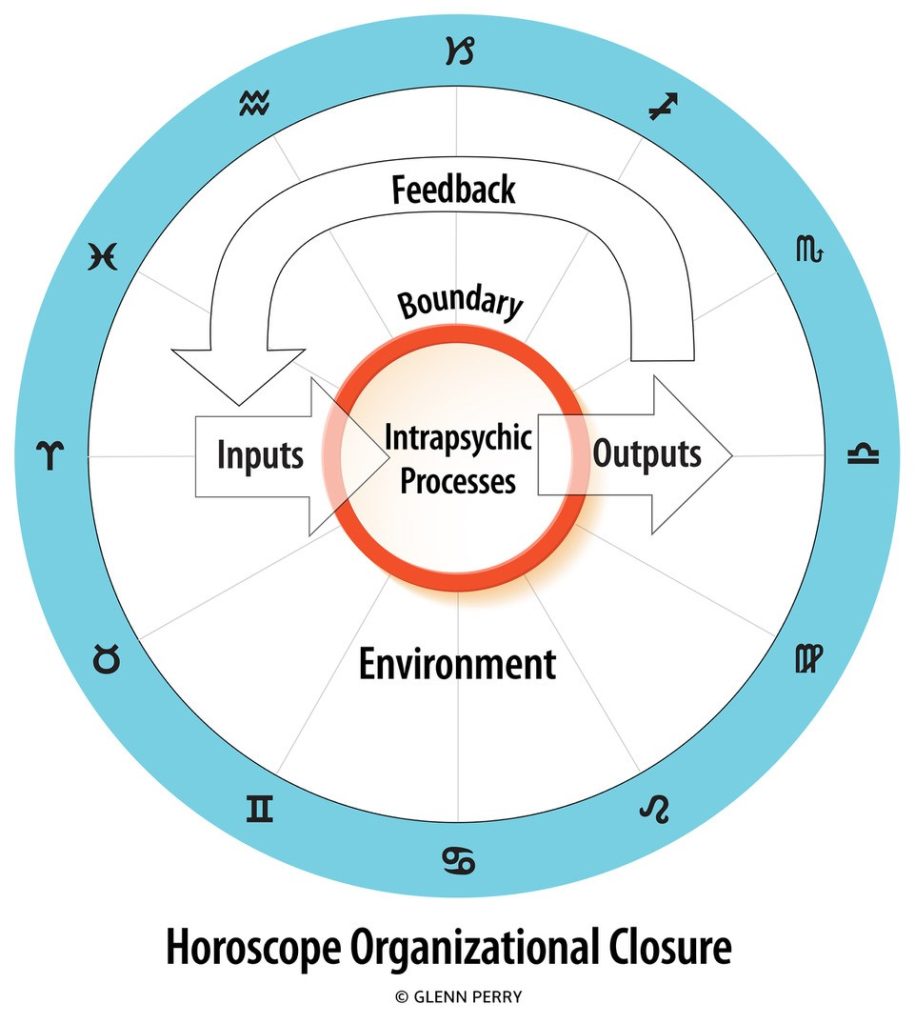
Figure 1: Horoscopes Exhibit Feedback & Organizational Closure
In the graphic above, everything inside the blue circle comprises the system of the psyche/horoscope as such, which extends beyond the boundary of the brain-body barrier signified by the smaller red circle at the center. The environment of interpersonal experience reflects the bounded self in the way iron filings conform to the contours of a magnetic field. Frequencies of consciousness are inherent in signs, planets, and aspects, all of which constitute intrapsychic process.
Externally, this field populates synchronistically as a repeating pattern of experience. The horoscope symbolizes an evolving story that produces output (behavior in pursuit of goals), which evokes inputs (feedback) from the environment that must be metabolized anew by psychic structure. The entire system exhibits organizational closure in that outputs and inputs are inseparably and meaningfully related. As such, they constitute a feedback loop that allows for growth and learning over time.
Because every variable in the chart represents an intrapsychic and environmental factor, the implication is that inner and outer constitute a feedback system. Again, feedback is that effect of a system’s output that is reintroduced to the system as information about the output. This enables the self-system (psyche) to adjust itself to maintain a desired state or transform itself in response to circumstances that cannot be processed by the current regime.
A postmodern conception resolves the false dichotomy of fate versus free-will by redefining fate as feedback that has been set in motion by the psyche’s own internal processes. The self-system is never entirely free, for it is always partially determined by consequences that necessarily follow from its choices and habits; yet it is free to change those habits by making new choices in response to frustrating or challenging events. Evolution, in effect, is built into the system, for with every advance in functionality, new conditions arise to stimulate yet further advances.
The symbolism of the birth chart is equally consistent with lower and higher level expressions of specific configurations. This requires breaking free from static, one-dimensional interpretations of chart variables and embracing instead a continuum outlook that allows for more integrated, functional expressions over time. An aspect like Venus square Pluto can symbolize a deep wound associated with disorganized attachment and fears of intimacy or the extraordinary achievements of a world famous marriage therapist like David Schnarch.19
Movement from less to more integrated versions of the psyche/chart occur within what might be described as an archetypal field. Because archetypes are cosmological principles that are immanent at every level of Nature, from the vibrating atoms of our bodies to the rhythmic cycles of the planets, the self-system is continuously engaged in a co-creative, participatory relationship with cosmic powers.
Postmodern astrology reconnects astrology with the outer world but not merely for the sake of predicting events. In the new conception, events have a dual function. First, as barometers of the soul’s integration, reflecting where there might be issues on an internal level; and second, as evolutionary drivers, motivating and providing opportunities for the individual to grow in specific ways. Predicting events is subordinate to interpreting the meaning and purpose of experiences that are reflected in planetary movements. The question becomes not what is going to happen, but what is it happening for? That is, what is it requiring of the individual in terms of their development as a human being?
Jung’s model accounted for singular instances of synchronicity and situated them within a growth-oriented framework. Synchronicity can be extended to larger time frames as well. The eastern concept of karma is analogous to synchronicity in that it postulates a meaningful coincidence between psyche and environment; yet stretches the time frame to include feedback relations that extend over the whole life and even from one life to another. In other words, what Jung calls synchronicity may be the normal, ongoing condition of human existence.
Over the last several decades, the evidence for reincarnation keeps getting stronger and stronger.20 This is especially relevant to astrology because it suggests that what we call fate is actually karmic feedback, or what systems theorists call evolutionary feedback: events specifically designed to compensate psychological imbalances and provide for a corrective, educative experience. As the soul learns from its own self-created fate, it gradually evolves toward wholeness, both within and without.
An open systems model of the psyche/horoscope is entirely consistent with the Jungian concept of synchronicity and the eastern doctrine of karma. In this view, what Jung called the Self—the divinity within—is orchestrating events that not only mirror psychic structure but provide a catalyst and vehicle to further an evolutionary process.
The postmodern conception of the relationship between psyche and environment, of fate and free-will, has come full circle. Cosmos is once again enchanted and infused with a benevolent intelligence, but the human self is reconstituted, too. No longer merely the effect of planetary causes nor required to stoically endure an unalterable fate, the psyche enters into full conscious partnership with cosmos, co-evolving and co-creating its future in response to an evolutionary imperative that is built into the structure of the Universe.
This is precisely what the birth chart seems to symbolize: a map of the psyche, yes, but also a path of evolutionary unfoldment with a unique trajectory that is inexorably pulled, teleologically, back to its own stellar source.
In this light, the practice of conscious evolution forms a natural complement to postmodern astrology. Conscious evolution can be defined as the intention to cooperate with an evolutionary process that is inherent in Nature. Whereas ancient conceptions of the Universe were inherently static, regarding time as cyclic but not progressive, a postmodern conception recognizes that the Universe is an ongoing creation, ever evolving and expanding.
If microcosm truly mirrors macrocosm as the ancients believed, then we, too, are ever evolving and expanding. Fate becomes not something merely to be endured or escaped but passionately embraced. By spurring us to become all that we are can be, fate is the midwife to destiny.
Summary and Conclusion
Just as consciousness evolves through stages and levels, so too does astrology. Each stratum in the history of the divine science—archaic, traditional, modern, and postmodern—is inclusive of the previous level, but in a way that changes the perspective of that level by adding something new. This is precisely what a postmodern approach recognizes.21
A Hellenistic astrologer could still perform Babylonian rituals and entreat the gods to change their minds, while also cultivating fortitude, virtue, and the serenity to accept those things that cannot be changed. A modern astrologer could pray to God, cultivate stoic acceptance, and choose good over evil as characteristic of the traditional period, but also deepen self-awareness, resolve intrapsychic conflicts, and actualize latent psychological potentials.
A postmodern astrologer can do all of this, too, while also opening his or her heart to fate’s challenges and trusting that experience itself holds the key to unlocking an innate potential to reunite with the source of all Being. In short, each viewpoint can co-exist with its predecessor; yet each is fundamentally changed by the inclusion of a higher, more encompassing view.
* * * * *
This article was abstracted from chapter 1 of From Ancient to Postmodern Astrology by Glenn Perry, AAP Press, 2021.
Notes:
1 Hand, R. Toward a Postmodern Astrology. Published at www.astro.com, cited September 1, 2014.
http://www.astro.com/astrology/in_postmodern_e.htm
2 West, J.A. and Toonder, J.G., (1973). The Case for Astrology, Baltimore: Penguin, p. 87.
3 Morin, J.B. (1661). The Morinus System of Horoscope Interpretation, Baldwin (Ed.). Wash. D.C.: AFA, p. 1.
4 For a discussion of Popper’s criterion of falsifiability as applied to astrology, see Chapter 10 in Stealing Fire from the Gods by Perry, G.
5 The unfalsifiability of traditional techniques such as sect, terms, triplicity rulers, and time lords is explored in greater detail in chapters 3 and 4 of From Ancient to Postmodern Astrology by Perry, G.
6 The primary translators have been Robert Hand, Robert Schmidt, Robert Zoller, and Benjamin Dykes. Their collective works are too numerous to mention here.
7 Hall, C., & Lindzey, G. (1978). Theories of personality. New York: John Wiley & Sons.
8 For efforts in this direction see: An Introduction to AstroPsychology; Mapping the Landscape of the Soul; Depth Analysis of the Natal Chart; and From Ancient to Postmodern Astrology, by Perry, G. available at https://aaperry.com/astrology-books/
9 For a discussion on the difficulty and ill-advisability of applying quantitative research methods to astrology, see: Perry, G. (2008). Stealing fire from the gods: New directions in astrological research. Melbourne, FL: AAP Press
10 Rudhyar, D.. (1972). Person-centered astrology. Lakemount, GA: CSA Press
11 Ochieng, R., and Ndede, L. (2025). Beyond Evolution: Unraveling Intelligent Design in Nature’s Blueprint. Norway: BioCosmos Africa. This is just one of hundreds of books written over the past half century that provide hard scientific evidence against Darwinism and for Intelligent Design in Nature.
12As Richard Tarnas put it, astrology is archetypally predictive, not concretely predictive. This is a subtle but important distinction that derives from the multidimensionality and polyvalence of astrological variables and level of integration at which they are being expressed. For a more extensive discussion, see: https://aaperry.com/astropsychology_as_personality-theory/
13Hand, Ibid.
14 These four levels and stages are somewhat arbitrary divisions. Each level may be divisible into several sublevels or combined to form a single strata. Traditional astrology, for example, is commonly divided into Hellenistic and Medieval versions. Likewise, postmodern astrology could be seen as a more sophisticated version of modern astrology rather than constituting a strata all its own. The important point is that like all systems of knowledge, astrology evolves from simpler, more primitive versions to those that have greater depth, complexity, and explanatory power.
15 Campion, N. (2008). The dawn of history: A cultural history of western astrology. New York: Continuum Books, p. 61.
16 Spoken by Demetra George at a Kepler Conference in Seattle, WA.
17 The first recorded birthchart was of Babylonian origin in 410 BCE. Hellenistic astrology as such began sometime between the 1st and 2nd centuries BCE.
18 This view is largely attributed to the Dominican Friar, Saint Thomas Aquinas, in the 12th century.
19 Schnarch’s Venus square Pluto was discussed in Chapter 6, “Pluto Pathology (Part II): The Dark Side of Human Sexuality,” in Perry, G. (2018) Mapping the Landscape of the Soul. See also, Schnarch, D. (1997). Passionate Marriage: Keeping Love and Intimacy Alive in Committed Relationships. New York: W.W. Norton & Company.
20 Bache, C. (1994). Lifecycles: Reincarnation and the Web of Life. New York: Paragon House
21 The principle ‘transcend but include’ is a general feature of evolution across disciplines.
This insightful article effectively explores the evolution of astrological thought, highlighting the shift from deterministic views to more dynamic, co-creative perspectives. I found the analysis of postmodern astrology particularly thought-provoking.
“Such an excellent and thorough article you’ve shared with us — just like you always do, congratulations Glenn, I really appreciated it!”
I am in coursework, really, taking notes as I go, sometimes reading a phrase, statement, or sentence over and over and over, digesting as I go. This is new material, good news altogether, stimulating, thought-provoking, ringing true to hungry ears, eyes, and senses all around. I am thrilled with this article and I’m halfway through it. I’ve known myself as a misfit till now. My Christian belief in God as source is redefined in terms of the feedback system Glenn Perry describes herein. His practice of the divine art is helping, doing mountains of good. Thank you, Glenn Perry.